



When you're trying to rent a home, sometimes having a job and a good attitude isn't enough. Some renters need extra financial backing to qualify for a lease. This is where a guarantor comes in.
A guarantor is a person who provides extra financial backing for a lease agreement. They're often needed when a tenant's credit score, income, or work history falls short of the landlord's standards. While they don't live in the home, they're legally responsible for the rent if the tenant can't pay. It's a way to provide more security to the landlord and help the renter get approved for the property.
What Is a Guarantor?
A guarantor is a person or entity that promises to pay a debt if the main party fails to do so. This usually happens with rental leases.
The guarantor gives the landlord or lender more confidence that the bills will be paid. Think of it as a safety net. If the tenant stops paying rent, the landlord has someone else they can legally ask for the money.
Why People Use a Guarantor for a Lease
There are specific reasons why a renter might need this extra support and why a friend or family member would agree to help.
Why a Renter Needs a Guarantor
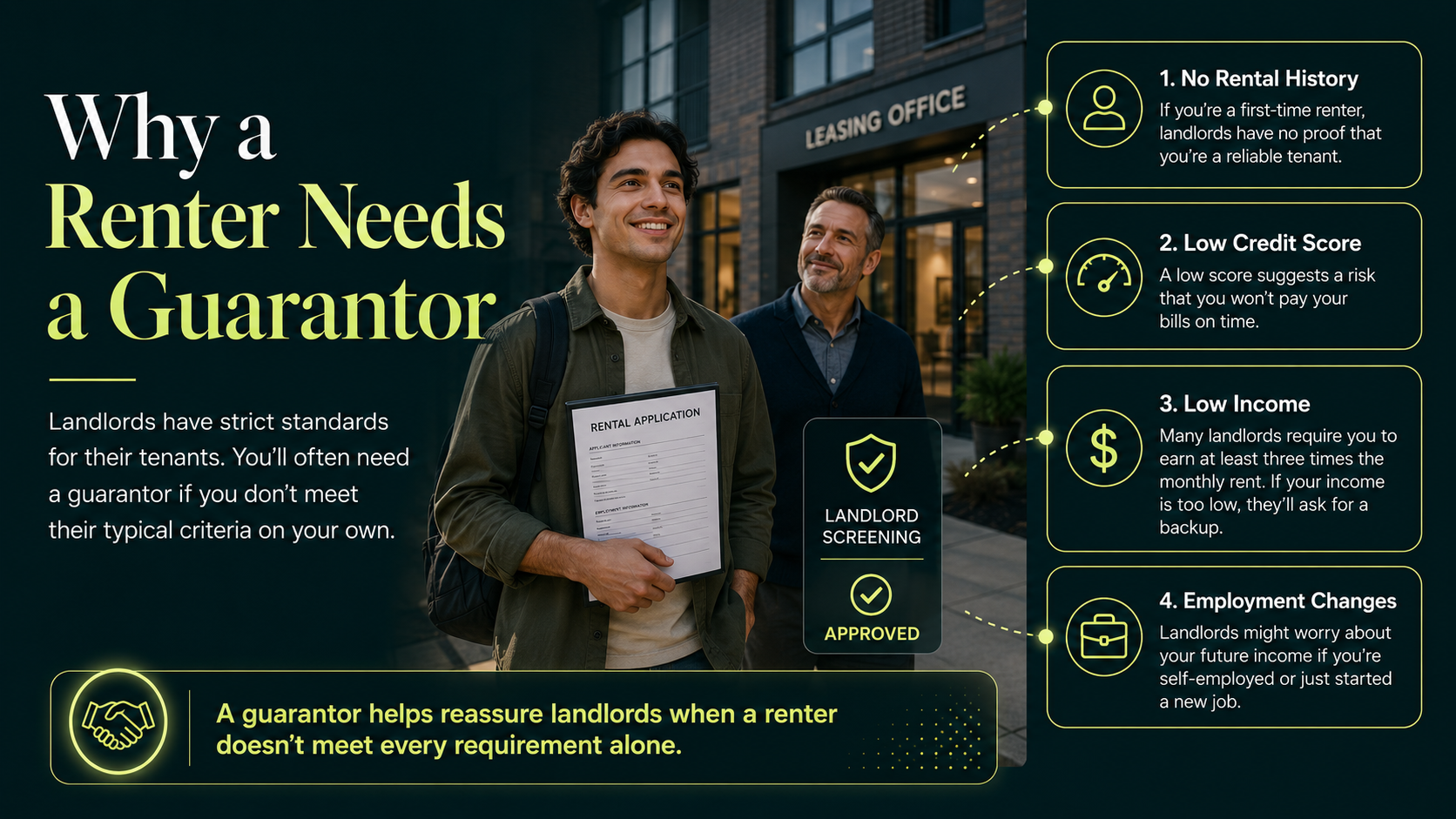
Landlords have strict standards for their tenants. You'll often need a guarantor if you don't meet their typical criteria on your own. Common reasons include:
- No Rental History: If you're a first-time renter, landlords have no proof that you're a reliable tenant.
- Low Credit Score: A low score suggests a risk that you won't pay your bills on time.
- Low Income: Many landlords require you to earn at least three times the monthly rent. If your income is too low, they'll ask for a backup.
- Employment Changes: Landlords might worry about your future income if you're self-employed or just started a new job.
Why Someone Chooses to Be a Guarantor
Agreeing to be a guarantor is a major financial responsibility. Most people only do this for someone they trust deeply. They usually choose to help because:
- Supporting Family: Parents often act as guarantors to help their children get started in their first apartment.
- Helping with a Move: A close friend or relative might step in to help a loved one move to a new city for school or a better career.
- Providing a Safety Net: The person knows you're responsible and trusts you'll pay, but they understand the landlord won't approve the lease without their signature.
What Does a Guarantor Do in Real Estate?
In a rental setting, a guarantor agrees to cover rent and other lease costs if the tenant can't pay. In a lending context, a guarantor backs a loan if the borrower defaults.
The main purpose of a guarantor is to reduce risk for the landlord.
- For a landlord, it means they're less likely to deal with unpaid rent.
- For a renter, it means they might get approved for a home they couldn't get without the guarantor backing..
When Is a Guarantor Needed?
Not everyone needs a guarantor. Landlords usually ask for one when an applicant doesn't meet their standard screening rules.
Limited Credit History
Many young people or people moving from another country don't have a credit score yet. A guarantor with good credit helps bridge that gap.
Low or Irregular Income
Landlords often want to see that a tenant makes three times the monthly rent. If a tenant doesn't make that much, or if their income changes every month, a guarantor provides extra security.
First-Time Renters
If someone has never rented before, they don't have references from past landlords. A guarantor shows the landlord that someone else trusts the renter to be responsible.
Students or Applicants Without Strong Financial Records
College students often have no income at all. In these cases, a parent or guardian usually acts as a guarantor so the student can live off-campus.
Who Can Be a Guarantor?
A guarantor is often a trusted family member, close friend or company. Landlords usually have strict rules for who can fill this role. They often want the guarantor to show reliable income and an excellent credit score. The exact standards can vary depending on the landlord, property manager, or lender.’
Guarantor vs. Co-Signer
While people often use these terms interchangeably, there's a key legal difference you should know.
A guarantor is typically a "backup" person who doesn't live in the unit. They only step in to pay if the tenant fails to do so.
A co-signer is different. They're legitimately on the legal documentation as a responsible party from the very first day. This means they share full responsibility for the rent, utilities, and any damages. Since they're a primary party on the lease, the landlord can ask them for payment at any time.
The exact rules can change depending on your specific lease, so it's always smart to read the fine print.
Can a Company Act as a Guarantor for a Renter?
Yes, a company can act as a guarantor. While most people ask a family member or a close friend, there are times when a business steps in to provide that financial backing. This usually happens in two ways: through professional guarantor services or through an employer.
Institutional Guarantor Services
There are specialized companies that exist just to act as guarantors for renters. If you don't have a person to ask, you can pay one of these services a fee to back your lease.
- How it works: You apply with the company, pay a fee (usually a percentage of the annual rent), and they sign the agreement with your landlord.
- Why landlords like it: These companies are often seen as very reliable because they have the funds to cover any unpaid rent, fees, or damages.
Employer Guarantors
Sometimes, a company will act as a guarantor for one of its employees. This is common when a business is moving a worker to a new city or a different country.
- Relocation support: If an employee doesn't have a local credit history, the company might sign the lease to help them secure a home quickly.
- Corporate housing: In some cases, the company might lease the apartment directly and then let the employee live there.
What Responsibilities Does a Guarantor Have?
Being a guarantor is a serious commitment. It isn't just a favor on paper.
Covering Missed Rent
If the tenant doesn't pay, the landlord will call the guarantor. The guarantor is legally required to pay the balance.
Backing the Lease Obligation
The guarantor is responsible for the entire length of the lease. If the lease is for 12 months, the guarantor is responsible for the entire term.
Providing Financial Information During the Application
A guarantor has to go through a screening process too. They may need to share their tax returns, bank statements, and social security number with the landlord.
Does a Guarantor Have Rights to the Property?
Being a guarantor does not usually mean you own the property. It also doesn't mean you have the right to live there. The guarantor’s role is about financial support, not ownership or occupancy rights. Their name is on the contract to provide financial security for the landlord and renter, but they aren't the ones moving in.
Why Landlords Ask for a Guarantor
Landlords use guarantors to protect their business and manage risk.
1. To Reduce Payment Risk
A guarantor gives the landlord reassurance. They know that even if the tenant hits a hard time, there's a backup plan for the rent.
2. To Approve More Applicants With Caution
A guarantor allows a landlord to say "yes" to more people. They can approve someone with a low credit score because the guarantor has a high one.
3. To Add Confidence to the Lease Agreement
It adds another layer of safety to the deal. It makes the lease agreement stronger and more reliable for the property owner.
Risks of Being a Guarantor
The biggest risk is that you can become legally responsible for someone else's debt. This commitment should not be treated casually. If the tenant stops paying and the guarantor doesn't pay either, it can damage the guarantor's credit score. The exact financial risk depends on what the agreement says.
What Should Renters and Owners Review Before Agreeing to a Guarantor?
Before anyone signs, both the renter and property owner should check a few things.
The Scope of the Guarantee
Check exactly what the guarantor is promising to cover. Does it only cover rent, or does it cover damages to the apartment too?
The Length of the Obligation
Make sure you know how long the guarantee lasts. Does it end after one year, or does it automatically renew if the tenant stays longer?
What Payments Are Covered
Find out if it covers late fees or legal costs if the landlord has to go to court.
What Financial Documents Are Required
The landlord and the guarantor should agree on what paperwork is needed. This keeps the process moving fast.
Is a Guarantor the Same as Rent Guarantee Insurance?
No, they aren't the same thing. A guarantor is a person or a company that backs the obligation. Rent guarantee insurance is a specific insurance product. It may cover rent if a tenant stops paying for a specified period. These are different tools. Landlords should not treat them as the same thing.
Secure More Than Just the Rent
A guarantor is a great way to protect your rental income. But you still need to protect the property itself. Obie helps you find the right insurance in minutes. It’s fast, simple, and built for landlords like you. Don't let a disaster ruin your hard work. Get a quote today.



.svg)