



If you own a rental property, you know that the work never truly stops. Between finding tenants and fixing leaky faucets, it can feel like a full-time job. This is where a property manager comes in.
A property manager is a person or company that handles the day-to-day operations of a rental property for the owner. They act on your behalf to make sure the building stays in good shape, and the rent keeps coming in. Their job isn't just about collecting a check. They help you save time, stay organized, and keep your investment profitable.
What Does a Property Manager Do?
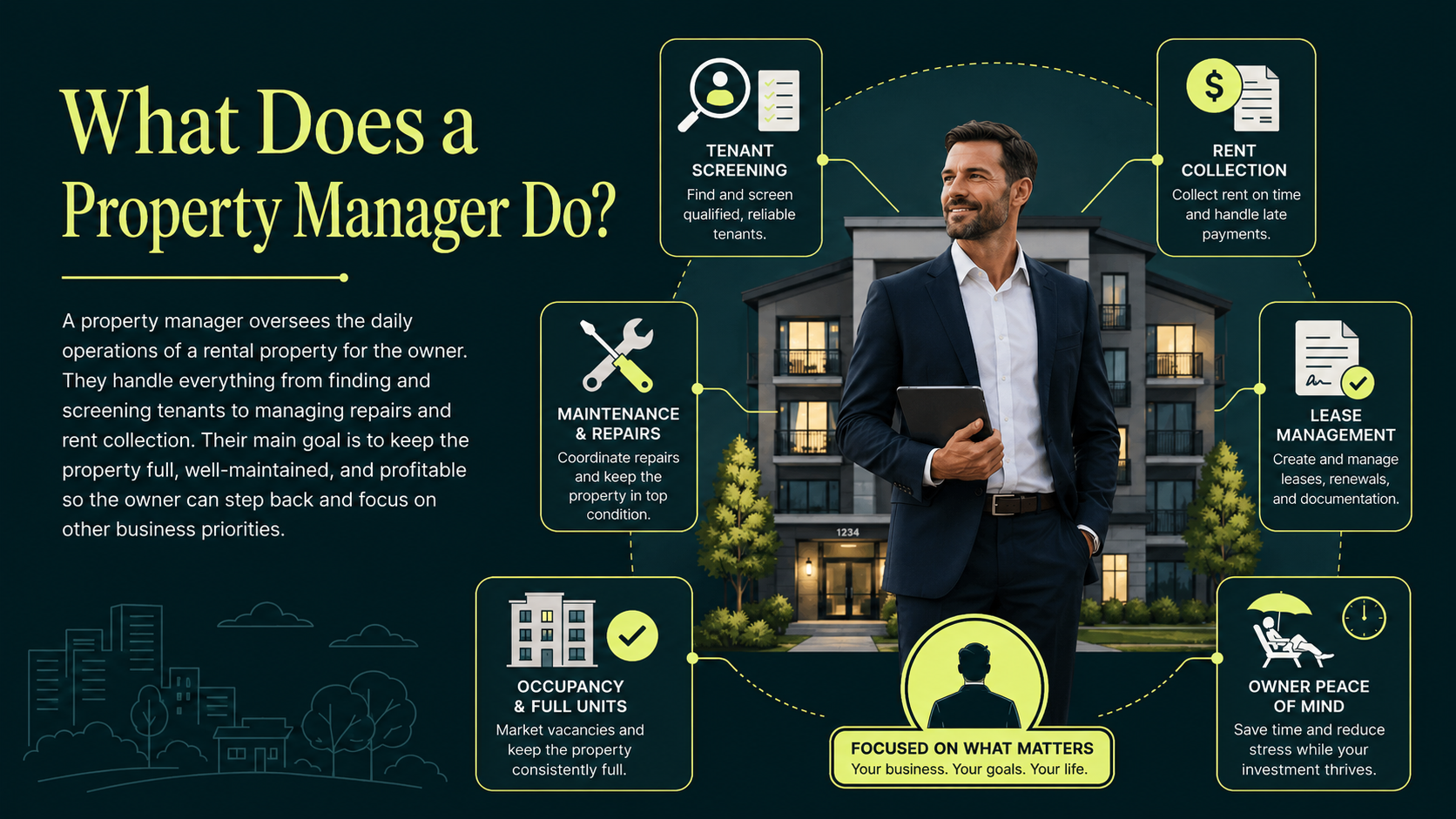
A property manager oversees the daily operations of a rental property for the owner. They handle everything from finding and screening tenants to managing repairs and rent collection. Their main goal is to keep the property full, well-maintained, and profitable so the owner can step back and focus on other business priorities.
What Types of Properties Do Property Managers Handle?
Property management is a specialized field where firms often focus on specific asset classes. While some managers work with commercial spaces like offices or warehouses, most residential managers focus on the housing market.
Within the residential sector, management typically covers three main categories:
- Single-Family Rentals: These are individual standalone homes. Managers for these properties focus on maintaining the specific property value, managing yard work, and building long-term relationships with a single household.
- Small Multifamily Properties: This includes duplexes, triplexes, and townhomes. Managers handle the unique challenges of having multiple tenants share walls or common structural elements within one building.
- Apartment Buildings: These are high-density residential complexes. Management at this level is often more complex because it includes the maintenance of shared amenities such as laundry rooms, fitness centers, and pools.
This structure ensures the property remains profitable and well-maintained, allowing the owner to step back and focus on other business priorities.
Property Manager Responsibilities
The role of a manager involves many different tasks. Here are the things they do for investment property owner.
1. Marketing Vacant Units
When a unit is empty, you're losing money. A manager creates listings, takes photos, and posts the property on rental sites. They respond to questions and schedule showings to get a new tenant in as fast as possible.
2. Screening Tenants
Finding the right tenant is one of the most important jobs. Managers review applications and check credit scores. They also look at past rental history to make sure the person is reliable and follows the rules.
3. Managing Lease Agreements
A manager handles all the paperwork. They coordinate the lease signing and explain the rules to the tenant. They also manage move-in and move-out inspections to document the condition of the home.
4. Collecting Rent and Tracking Payments
You don't have to chase down payments. The manager collects the monthly rent and monitors for any late fees. They keep all the records organized so you know exactly how much you've earned.
5. Handling Maintenance and Repairs
When a heater breaks at 2:00 a.m., the tenant calls the property manager, not you. A good property manager will have a ready-made list of trusted contractors to handle repairs and keep the property in good condition.
6. Communicating With Tenants
The manager is the main point of contact. They answer questions, handle complaints, and solve routine issues before they become big problems for you.
7. Managing Property Finances
They track all the money coming in and going out. Most managers provide monthly reports so you can see your income and expenses in one place.
8. Supporting Legal and Regulatory Compliance
There are many local laws that affect rentals. A manager stays up to date on these rules to make sure your property and your leases follow the law.
9. Coordinating Evictions When Necessary
If a tenant stops paying or breaks the lease, a manager handles the eviction process. They work within the local legal requirements and keep you informed every step of the way.
10. Helping Keep Insurance Current
A manager monitors your landlord insurance needs. They can flag when a policy is up for renewal or help gather the paperwork if you need to file a claim.
What a Property Manager Does Not Usually Do
While a property manager handles the heavy lifting of day-to-day operations, they are essentially your representative, not your partner in financial risk.
Here is a list of action items a property manager would not typically do:
- Fund Property Expenses: They will never use their own bank account to pay for repairs, utilities, or contractor fees; these costs are always drawn from the property’s rental income or an owner-funded reserve.
- Provide Legal Counsel: While they understand housing laws and can handle evictions, they are not attorneys. They cannot provide formal legal advice or represent you in a lawsuit.
- Guarantee Investment Performance: They do not take on the financial risk of the investment. If a property sits vacant or the market dips, the financial loss remains entirely with the owner.
- Handle Personal Taxes: A manager tracks rental income and expenses, but they typically won't file your personal income taxes or provide specialized tax-shelter advice.
- Authorize Major Capital Improvements: Unless specifically outlined in the contract, they won't make large-scale structural decisions (like replacing a roof or adding an extension) without your explicit written approval.
- Pay the Mortgage: While some full-service firms offer this, most property managers leave the mortgage and property tax payments to the owner to avoid liability and ensure the owner maintains control over their debt.
Property Manager vs. Landlord
Property manager vs landlord, how do they differ?
- The Landlord is the person who owns the property.
- The Property Manager is the person hired to run the property for the owner.
An owner can choose to be their own manager (self-management), or they can hire a professional to take over the tenant-facing work.
Why Owners Hire a Property Manager
Most owners hire a manager for a few simple reasons:
- To Save Time: You don't have to deal with daily phone calls or emergencies.
- To Handle Stress: Managers take care of difficult conversations and late rent.
- To Manage from a Distance: If you live in a different state, you need someone on the ground to watch your investment.
- To Stay Organized: Managers have systems for rent collection and maintenance that work.
How Property Managers Help Protect Rental Income
A good manager actually helps you make more money. They reduce the time a unit sits empty by marketing it better. Their screening process leads to better tenants who pay on time. Also, by catching small maintenance issues early, they prevent expensive repairs later.
Questions to Ask Before Hiring a Property Manager
Before you sign a contract, ask these questions:
- What is included in your monthly fee?
- How do you handle maintenance calls?
- What is your process for screening tenants?
- How do you handle late rent or evictions?
- How often will I get financial reports?
- How do you communicate with both owners and tenants?
Support Your Owners With Smarter Protection
You handle the daily grind for your clients, so don't let a coverage gap ruin their investment. Obie makes it simple for property managers to get the right insurance for every unit in their portfolio. It’s fast, reliable, and built to help you look like a hero to your owners. Get a quote today.



.svg)