



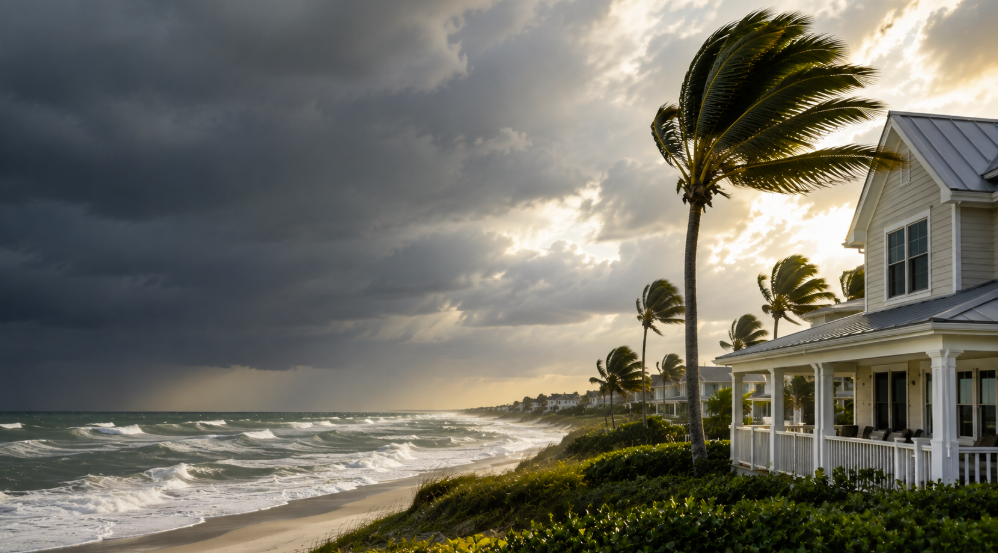
Owning a rental property in Alabama means protecting your asset from a unique geographical vise. Landlords here face a "dual threat" that is rare elsewhere: the catastrophic potential of Gulf Coast hurricanes and the violent, inland tornadoes of "Dixie Alley."
This combination of risks makes standard insurance obsolete. A basic homeowners policy won't cover a tenant-occupied property, and a generic landlord policy won't adequately shield your investment. This guide outlines the specific, data-backed insurance strategy Alabama landlords need to protect their income and assets.
The Risk in Numbers: An Alabama Landlord's Reality
To build the right defense, you must first understand the specific risks. The latest data from 2024 and 2025 highlights the situation.
Alabama’s Rental Housing Footprint
The Alabama rental market is a significant part of the state's housing. Almost 30% (29.8% to be exact) of all occupied homes in Alabama are rentals. This means landlords are responsible for a massive portfolio of properties that are constantly exposed to risk.
An Intensifying Weather Threat
Alabama is located in Dixie Alley, a region known for some of the country’s strongest and most frequent tornadoes. The National Oceanic and Atmospheric Administration (NOAA) reports:
- Alabama has been affected by more than 100 billion-dollar weather disasters between 1980 and 2024, including hurricanes, tornado outbreaks, and widespread hailstorms.
- Weather losses have accelerated in recent years, with 2023 and 2024 marked by multiple severe storm events causing significant property and infrastructure damage statewide.
- Coastal counties such as Baldwin and Mobile routinely endure hurricane-force winds, while northern counties frequently see destructive hail and wind events.
Daily Risks That Add to Overall Exposure
The Alabama Law Enforcement Agency (ALEA) tracks thousands of property crime cases annually. Break-ins, vandalism, and theft disproportionately impact rentals in certain zip codes.
Meanwhile, the U.S. Fire Administration recorded substantial residential fire activity in 2023. Many Alabama structure fires stem from everyday causes like cooking, electrical malfunctions, and heating equipment—all common in rental properties with tenant turnover.
These combined hazards underscore why landlords in Alabama benefit from a dedicated policy built to respond to these specific risks.
Is Landlord Insurance Required in Alabama?
The rules surrounding insurance requirements vary depending on who oversees or finances the property.
State-Level Requirement
There is no Alabama law requiring all landlords to carry landlord insurance for long-term residential rentals.
Lender Requirement
If a mortgage is attached to the property, the lender will require a dwelling policy — typically a DP-3 or equivalent rental-focused form. This ensures the structure is protected from fire, storms, and other covered losses.
Local Government Rules (Especially for STRs)
Cities with active tourism markets often regulate short-term rentals:
- Gulf Shores, Orange Beach, Birmingham, and Mobile may require STR operators to:
- Register the property
- Maintain liability insurance
- Provide documentation of $500,000–$1,000,000 in liability coverage
Rules differ by municipality, so landlords operating Airbnbs or vacation rentals must check local ordinances.
Practical Guidance
Even if you hold the property free and clear, Alabama’s weather patterns and liability risks make going uninsured extremely costly. One storm or electrical fire can wipe out years of rental income.
What Influences Landlord Insurance Costs in Alabama?
Several factors determine your premium, and Alabama’s geography plays a major role.
1. Weather Exposure and Regional Location
- Hurricane and tropical storm risk sharply increases rates in Mobile and Baldwin counties.
- The central and northern portions of the state (Decatur, Huntsville, Tuscaloosa) lie in areas with high tornado frequency.
- Widespread hail and severe thunderstorms lead to elevated claims, especially affecting roof replacement costs.
- Flooding, whether from storm surge or rising rivers, is not covered by standard landlord policies.
2. Property-Specific Details
Insurers evaluate:
- Year the home was constructed
- Type of construction (brick vs. wood-frame)
- Roof age and material
- Condition of electrical and plumbing systems
- Whether the home is a mobile or manufactured structure — common in Alabama and priced differently due to wind susceptibility
3. Coverage Selections
Your choices matter:
- Higher building coverage = higher premium
- Higher deductible = lower premium
- Additional liability limits result in increased costs
- DP-1 vs. DP-3 selection affects pricing
4. Neighborhood and Claims History
Rates can shift dramatically within a single metro area and previous landlord insurance claim history:
- Crime rates by zip code
- Distance from the nearest fire station
- Previous claims associated with the property
- Proximity to areas with frequent wind/hail events
Key Exclusions Alabama Landlords Need to Understand
Even comprehensive landlord policies exclude certain types of damage unless additional endorsements are purchased.
1. Flood Damage
Standard landlord insurance policies in Alabama do not cover losses caused by flooding in any form. This includes water intrusion from:
- Storm surge along the Gulf Coast during hurricanes or tropical storms
- Overflowing rivers, such as the Alabama River, Tombigbee River, Black Warrior River, and Tennessee River
- Flash flooding, which is common in counties like Jefferson, Madison, and Tuscaloosa
- Groundwater seepage following heavy rain events
- Washes and drainage backups not caused by a sudden, accidental mechanical failure
Because the state includes both coastal floodplains and inland areas prone to flash flooding, many Alabama landlords choose to carry a separate NFIP flood policy or a private market flood policy. Landlords with properties in FEMA-designated Special Flood Hazard Areas (SFHAs) will be required by lenders to maintain flood insurance.
Important distinctions:
- Flood landlord insurance covers rising water, not wind-driven rain entering through a damaged roof or window.
- Coverage is often limited on the lower level or basement of a home.
- NFIP policies have separate deductibles for building damage and personal property.
Failing to carry flood coverage can lead to losses that could easily exceed the annual rental income, especially in high-risk areas like Dauphin Island, Orange Beach, and Mobile.
2. Earth Movement
Earth movement exclusions apply broadly, regardless of the cause of the shifting ground. In Alabama, this is particularly important because of:
- Sinkholes, which occur in parts of north and central Alabama due to underlying limestone formations
- Soil contraction and expansion, especially in areas with clay-heavy soil such as Montgomery and Birmingham suburbs
- Mine subsidence, which poses a risk in regions with historical or abandoned coal mining activity
- Landslides, though less common, may occur in hilly northern counties
Landlord insurance will not pay for structural cracking, foundation settlement, collapsing floors, or shifting caused by these conditions.
Landlords can sometimes purchase:
- Sinkhole endorsements (availability varies by county)
- Mine subsidence coverage, typically offered through specific state or private programs
- Earth movement riders for certain areas
However, these endorsements often involve strict inspections and may exclude existing damage.
Without the proper add-ons, landlords may face expensive repairs such as slab stabilization, foundation rebuilding, or structural reinforcement—all excluded under standard landlord insurance.
3. Wear and Tear
Wear and tear is one of the most misunderstood exclusions. Insurance only applies to sudden and accidental damage, not the natural aging or deterioration of a property.
Examples especially relevant for Alabama properties include:
- Rust or corrosion from humidity, coastal salt air, or outdated plumbing
- HVAC decline, which is common in high-temperature regions where units run heavily throughout the year
- Gradual roof wear, such as broken shingles, blistering from the sun, or deterioration caused by long-term exposure to wind and moisture
- Warping or swelling wood, especially in older properties without moisture barriers
- Slow leaks, mold development, or deterioration caused by untreated moisture
- Termite or pest damage, which is a major issue in Alabama’s warm climate
These issues fall under maintenance responsibilities and must be repaired at the landlord’s expense.
Insurance will generally only step in when:
- A pipe suddenly bursts
- A tree limb crashes through the roof
- A fire damages the HVAC system
- A storm causes sudden structural damage
Routine upkeep, aging materials, and failure to maintain are never covered.
4. Tenant Belongings
A landlord policy insures the structure, not what tenants bring into the property. This means:
- Furniture
- Clothing
- Electronics
- Appliances they personally own
- Decorations, décor, and household items
are not protected under the landlord’s policy.
This distinction becomes especially important after:
- A kitchen fire
- A break-in or theft
- Water damage from a plumbing failure
- Smoke damage from a tenant accident
Even if the landlord covers the damage to the building, the tenant's losses remain their own responsibility.
For this reason, many Alabama landlords require tenants to carry renters insurance, which is inexpensive and typically includes:
- Personal property protection
- Liability coverage
- Loss-of-use coverage (hotel stays if the unit becomes temporarily uninhabitable)
Landlords can include this requirement in the lease and request proof of coverage at signing and renewal.
5. Intentional Damage or Long-Term Deterioration
Landlord insurance only covers accidental loss. Damage caused intentionally or through neglect will not be covered.
Common Alabama rental scenarios that fall under this exclusion include:
- Malicious damage, such as a tenant punching holes in drywall during an eviction dispute
- Intentional vandalism, graffiti, or destruction caused by upset tenants
- Excessive wear from pets, such as chewed doors, urine damage, or shredded carpeting
- Damage caused by long-term neglect, such as failing to report leaks, resulting in rotted flooring
- Unapproved renovations, where tenants alter plumbing, wiring, or walls
- Gradual deterioration, like slow mold growth from unaddressed moisture problems
Insurance differentiates between:
Covered
- A tenant forgets to turn off the stove, causing a sudden grease fire
- A guest accidentally cracks a window
- A storm breaks the fence and causes a tree limb to fall onto the roof
Not Covered
- A tenant intentionally destroys the unit
- Pets repeatedly damage flooring over months
- Long-term moisture or mold that was never addressed
- Broken fixtures caused by misuse or neglect
These types of losses must be handled through the security deposit, additional tenant charges, or legal action not through insurance.
Get an Alabama Landlord Insurance Quote in Minutes
Protecting your rental property in Alabama shouldn’t be slow or complicated. Obie gives you instant, transparent pricing tailored to your exact address without long forms or waiting for an agent to reply. Whether your property is along the Gulf Coast or in a tornado-prone inland county, Obie delivers coverage designed for Alabama’s unique risks. Keep your investment secure with a fast, affordable policy built for landlords. Get your landlord insurance quote here.
FAQs about Landlord Insurance in Alabama
Does landlord insurance cover appliances that came with the rental property?
Yes. Appliances that you, the landlord, provide, such as stoves, refrigerators, built-in microwaves, and dishwashers, are typically covered if they are damaged by a covered peril like fire, wind, or vandalism. However, wear-and-tear or mechanical failure is not covered.
Are detached structures covered under landlord insurance in Alabama?
Generally yes, but only if you add coverage. Detached garages, sheds, fences, and storage buildings need to be listed and insured under “Other Structures” coverage. Without this, damage to these structures may not be reimbursed.
Does landlord insurance cover injuries to maintenance workers or contractors?
No. Workers injured while performing paid work on your property are typically covered by their employer’s workers’ compensation insurance—not your landlord policy. Your liability protection applies to tenant or guest injuries, not contractors.


.svg)