



As 2026 begins, the Georgia rental market is entering a phase of stabilization and realism. Following several years of historically high rate increases, property owners are finally seeing signs of premium moderation, coupled with a shift toward stricter, property-specific underwriting.
If you own rental property in the Empire State of the South, here is the data-backed, factual outlook for your insurance costs and obligations this year.
The 2026 Market Forecast: A "Softening" Trend
A critical development for Georgia landlords in 2026 is the stabilization of the broader property insurance market. Industry reports analyzing the January 2026 renewals indicate a highly anticipated "softening" trend.
- Reinsurance Relief: Reinsurance treaties (the insurance that retail insurance companies buy to protect themselves) have seen an influx of global capital for 2026. According to Guy Carpenter's 2026 Renewal Report, abundant capacity is driving competitive pricing conditions, with global property catastrophe rates-on-line dropping by double digits. This downward pricing pressure on carriers is helping to stabilize retail policies, providing relief from the aggressive 15–20% annual premium spikes seen in recent years.
- Stricter Underwriting Standards: While the macro market is stabilizing, individual carriers are shifting from broad state-wide rate hikes to highly granular risk analysis. "Blind renewals" at preferred rates are increasingly rare. To secure the best premiums in 2026, landlords must provide verifiable proof of maintenance such as recent roof inspections and modern plumbing updates to qualify for the most competitive underwriting tiers.
Average Costs and Regional Variations
Landlord insurance (typically a DP-3 policy) generally costs about 20% to 25% more than a standard homeowners policy because tenant-occupied homes statistically experience a higher frequency of claims.
According to our 2026 landlord insurance cost estimates, standard landlord insurance in Georgia currently averages between $1,100 and $1,700 annually for a typical single-family home. However, Georgia’s diverse geography creates significant internal price gaps:
- Metro Atlanta: High property values and localized risks (such as theft and vandalism) keep premiums firmly toward the higher end of the spectrum.
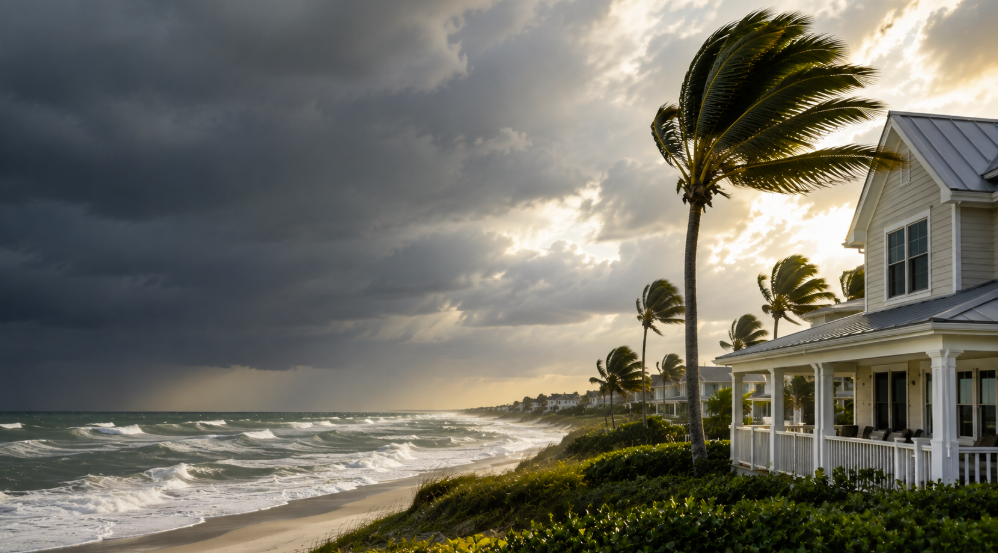
- Savannah / Coastal Georgia: Exposure to hurricanes and windstorms drives premiums significantly higher, often exceeding $3,000 to $4,000+ depending on proximity to the coast and wind mitigation features.
- Augusta & Macon: These areas often yield more moderate baseline rates, though aging infrastructure and localized storm drainage issues still play a major role in underwriting.
Legislative Impacts: SB 35 and HB 399
Georgia landlords must adapt to two major legal shifts that directly affect property management and insurance coverage in 2026:
- The 60-Day Notice Rule (SB 35 / Act 277): Effective January 1, 2026, Georgia law (SB 35) requires property insurers to provide at least 60 days' written notice before canceling or non-renewing a policy (up from the previous 30 days). This structural fix gives landlords crucial extra time to shop the market and prevent coverage lapses that could trigger expensive, force-placed insurance by mortgage lenders.
- In-State Property Management (HB 399): Effective July 1, 2025, Georgia HB 399 mandates that out-of-state owners of single-family or duplex rentals must hire a Georgia-licensed property manager. If the management firm is also out of state, they must have a dedicated Georgia-based employee. From an insurance perspective, having local representation statistically reduces response times to physical hazards (like pipe leaks or HVAC failures), which carriers view favorably when assessing risk.
The Rise of "Percentage-Based" Deductibles
A major reality for 2026 is the continued enforcement of percentage-based deductibles for wind and hail. Instead of a flat dollar deductible (e.g., $1,000) across the board, many carriers in the Southeast now mandate a 1%, 2%, or even 5% deductible specifically for wind and hail damage to offset the rising frequency of severe convective storms.
On a property insured for $300,000, a 2% wind/hail deductible means the landlord is responsible for the first $6,000 of a roof claim after a severe thunderstorm or hurricane. Landlords must ensure their 2026 cash reserves reflect these higher out-of-pocket thresholds.
Why You Need Landlord Insurance in Georgia
Many new investors mistakenly believe a standard homeowners policy is sufficient. Here is why specialized landlord insurance is a non-negotiable business essential:
- Protection Against Denied Claims: Standard homeowners policies (HO-3) are strictly for owner-occupied dwellings. If an adjuster discovers the home is being used as a rental without the proper policy, the carrier will likely deny the claim entirely due to misrepresentation.
- Loss of Rental Income (Fair Rental Value): If a storm or fire makes your property unlivable, your mortgage and tax obligations don't stop. Landlord insurance provides "Loss of Use" coverage, reimbursing you for the rent you would have collected while the property is being repaired.
- Liability for Tenant Claims: You can be held liable if a tenant or their guest is injured on the property due to structural issues (like a loose handrail). Landlord liability coverage helps pay for legal defense fees and settlements, shielding your personal assets.
Tips on Choosing Landlord Insurance for Your Rental Property
Choosing a policy in 2026 requires more than just looking for the lowest monthly premium. Follow these practical tips:
- Prioritize "Replacement Cost Value" (RCV): Avoid "Actual Cash Value" (ACV) policies when possible. ACV only pays the depreciated value of your property (e.g., the value of a 15-year-old roof, not a brand new one). Ensure your policy pays to rebuild at today’s construction prices.
- Consider a Higher AOP Deductible: If your cash reserves allow, raising your "All Other Perils" (AOP) deductible from $1,000 to $2,500 can notably reduce your annual premium.
- Require Renters Insurance: Mandate in your lease agreement that tenants carry their own Renters Insurance with liability coverage. Your policy does not cover their personal belongings, and requiring them to have their own coverage reduces your liability exposure.
Protect your Georgia investment and your peace of mind with Obie
Managing rental properties in Georgia is rewarding but comes with unique risks, from unpredictable weather to liability concerns. Why settle for slow, outdated insurance? Obie offers a modern, transparent approach tailored specifically for landlords. Get a custom quote in minutes—not days—and secure competitive rates that protect your cash flow and your assets. Join thousands of investors who trust Obie for smarter, faster and more reliable coverage.
Get your instant quote from Obie today.
FAQs
Is landlord insurance required by law in Georgia?
No, Georgia state law does not legally mandate landlord insurance. However, if you have a mortgage or any form of financed capital on the property, your lender will almost certainly require a landlord policy (typically a DP-3 form) as a condition of the loan. Furthermore, as of 1 January 2026, out-of-state landlords are now required to have in-state representation to handle tenant communications, which many insurers now verify during the underwriting process to assess management risk.
What is the average cost of landlord insurance in Georgia for 2026?
For 2026, the average annual premium for a landlord policy in Georgia is approximately $1,081 for a standard single-family home. However, for properties with $300,000 in dwelling coverage in high-growth areas such as Metro Atlanta, premiums typically range from $2,100 to $2,400. Factors such as the new 2026 documentation requirements and the age of your HVAC system (following the new automatic warranty transfer laws) can significantly influence your specific rate.
Can I just use my homeowners' insurance if I rent out the property?
No. Using a standard homeowners policy for a rental property is a leading cause of denied claims in Georgia. Homeowners insurance is strictly for owner-occupied residences. Once you move out and a tenant moves in, the "risk profile" changes. Landlord insurance includes specific protections that homeowners' policies lack, such as Fair Rental Value coverage (which replaces lost rent during repairs) and premises liability for tenant-related injuries.
Does landlord insurance cover my tenant's personal belongings?
It does not. Your policy covers the "dwelling" (the structure) and any appliances you own (like the fridge or dishwasher). It provides zero protection for the tenant’s furniture, electronics or clothing. This is why it is a best practice in 2026 to require tenants to maintain their own Renters Insurance policy with at least $100,000 in liability coverage, naming you as an "Interested Party."
What is the new "60-Day Rule" for 2026?
Starting 1 January 2026, under SB 35 (Act 277), Georgia insurance carriers are now required to provide at least 60 days' notice before cancelling or refusing to renew a property insurance policy. This is a significant increase from the previous 30-day requirement, giving Georgia landlords more time to shop the market and secure new coverage if their current carrier pulls out of a specific region.
Does my policy cover flood damage from Georgia storms?
Standard landlord insurance policies in Georgia exclude flood damage, even if the flood is caused by a hurricane or heavy storm surge. In 2026, with the increasing frequency of "convective" storms in the Southeast, many landlords are choosing to add a separate Private Flood Insurance policy or a FEMA-backed NFIP policy to ensure full protection.


.svg)